skip to main |
skip to sidebar
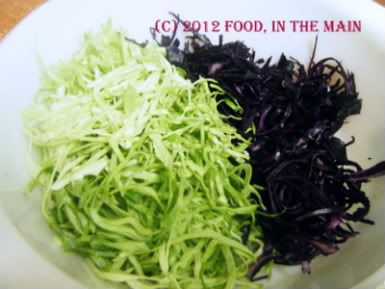
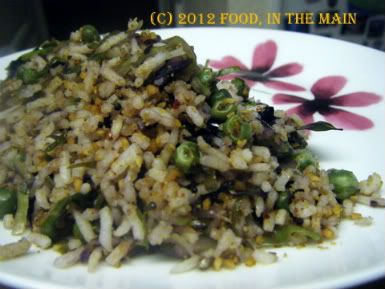 Cabbage is one of my favourite vegetables, pretty much no matter how it’s cooked – as long as that doesn’t mean cooking it to a stinky sulphur-y mush. I don’t care much for white cabbage, because (in my opinion) it’s stinkier and sulphur-ier than green cabbage. (It might not be any more or less smelly, you understand - I’m just quoting the opinion put forward by my nose). Purple cabbage is kinda like white cabbage except purple… and because it’s a pretty colour for cabbage, I don’t shun it.
But the cabbage I use the most is a pointy, tear-drop shaped green cabbage marketed under the name “sweetheart cabbage” in the supermarkets here. That said, I quite like the round green kind too. But sweetheart by name, sweetheart by taste – no, ok, that simile doesn’t work. There’s a good reason I’m not a world-famous writer, I suppose.
Anyway, those are the three types of cabbage available - unless you count the round green cabbage as a different variety from the pointy green one… in which case, the cabbage count goes from three to four. I’m sure that, like potatoes, there are hundreds of different varieties of cabbage, all of which have individual names, again like potatoes. I probably just don’t know about them.
Cabbage is one of my favourite vegetables, pretty much no matter how it’s cooked – as long as that doesn’t mean cooking it to a stinky sulphur-y mush. I don’t care much for white cabbage, because (in my opinion) it’s stinkier and sulphur-ier than green cabbage. (It might not be any more or less smelly, you understand - I’m just quoting the opinion put forward by my nose). Purple cabbage is kinda like white cabbage except purple… and because it’s a pretty colour for cabbage, I don’t shun it.
But the cabbage I use the most is a pointy, tear-drop shaped green cabbage marketed under the name “sweetheart cabbage” in the supermarkets here. That said, I quite like the round green kind too. But sweetheart by name, sweetheart by taste – no, ok, that simile doesn’t work. There’s a good reason I’m not a world-famous writer, I suppose.
Anyway, those are the three types of cabbage available - unless you count the round green cabbage as a different variety from the pointy green one… in which case, the cabbage count goes from three to four. I’m sure that, like potatoes, there are hundreds of different varieties of cabbage, all of which have individual names, again like potatoes. I probably just don’t know about them.
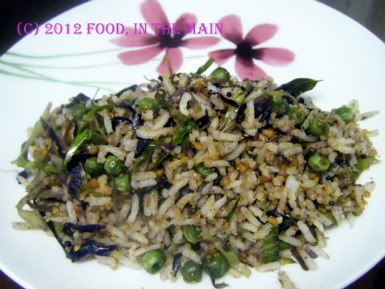
So, coming back to what I do know (a much shorter topic, haha), which is that I love cabbage, what I made with a combination of green and purple cabbage was a luvverly rice dish. With added peas. There's hardly anything that doesn't benefit from the addition of peas, unless it's a cake. Although I bet someone somewhere has tried a green peas cake and written about it on their blog... Ok, I'm off to google for green peas cake now, but you please feel free to read my recipe below and try it out, because it's really, really tasty - especially if you're a cabbage enthusiast like me.
Recipe for: Cabbage and peas rice
 Ingredients:
2 cups cooked basmati rice
3 cups cabbage, finely shredded
 1/2 cup peas (fresh or frozen)
1 tsp oil
2 tsp mustard seeds
1/4 tsp asafoetida powder
a few fresh/frozen curry leaves
Salt to taste
Peanuts and chopped coriander leaves for garnish (optional)
1/2 cup peas (fresh or frozen)
1 tsp oil
2 tsp mustard seeds
1/4 tsp asafoetida powder
a few fresh/frozen curry leaves
Salt to taste
Peanuts and chopped coriander leaves for garnish (optional)
For the masala powder:
1/2 tsp oil
1 htsp urad dal
1 htsp tuvar dal
1 htsp chana dal
1 htsp coriander seeds
4-5 dried red chillies (or to taste)
2 tbsp shredded fresh or dry coconut
Method:
1. Heat 1/2 tsp oil in a large pan. 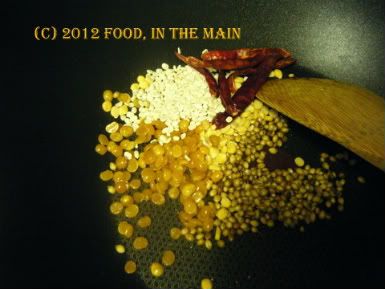 Fry the masala powder ingredients (bar the coconut) over a low flame till the dals turn a pale golden brown, and the chillies are a shiny dark red. Remove to a plate and let cool.
2. Grind the cooled roasted dals along with the coconut to a fairly smooth powder.
Fry the masala powder ingredients (bar the coconut) over a low flame till the dals turn a pale golden brown, and the chillies are a shiny dark red. Remove to a plate and let cool.
2. Grind the cooled roasted dals along with the coconut to a fairly smooth powder.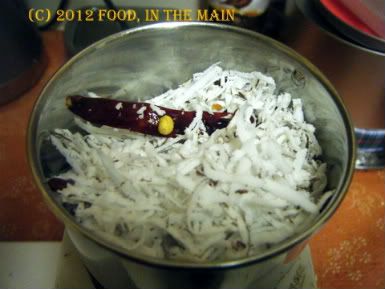 Reserve.
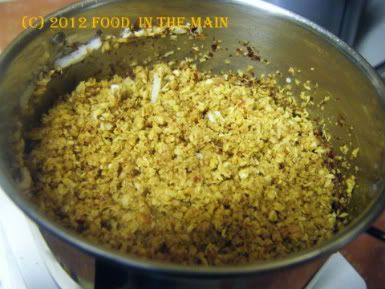 3. Heat the remaining oil in the same pan and add the asafoetida powder, curry leaves and mustard seeds. Cover the pan and let the seeds pop.
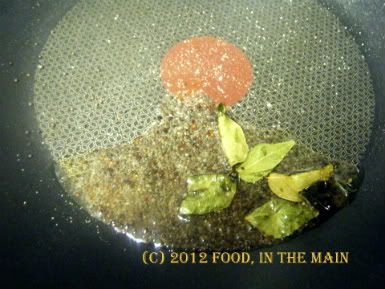 4. Now add the shredded cabbage and peas and stir well.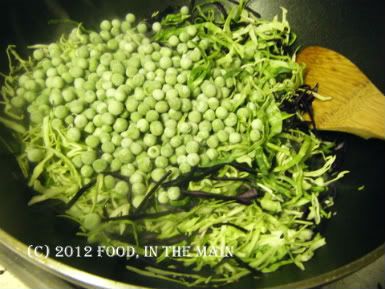
Cover the pan tightly and let the vegetables cook on a very low heat for about 7 minutes, till the cabbage is cooked but still retains some bite.
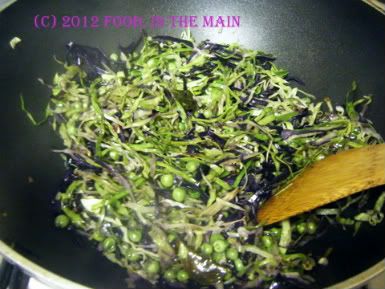 5. Once the cabbage is done, add the ground coconut masala powder and salt to taste, and mix well.
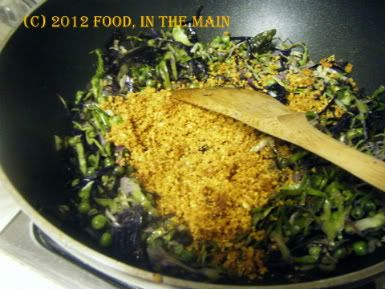
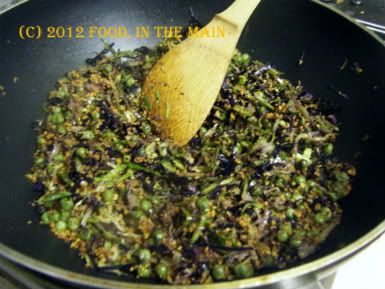 6. Then add the rice and mix it in carefully until it is distributed evenly.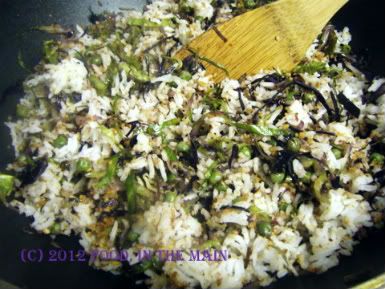
Add the chopped coriander (if using) and scatter the roasted peanuts over. Serve hot with cucumber raita and papad or crisps on the side.
RECIPE: CABBAGE AND PEAS RICE
Ingredients:
2 cups cooked basmati rice
3 cups cabbage, finely shredded
1/2 cup peas (fresh or frozen)
1 tsp oil
2 tsp mustard seeds
1/4 tsp asafoetida powder
a few fresh/frozen curry
Salt to taste
Peanuts and chopped coriander leaves for garnish (optional)
For the masala powder:
1/2 tsp oil
1 htsp urad dal
1 htsp tuvar dal
1 htsp chana dal
1 htsp coriander seeds
4-5 dried red chillies (or to taste)
2 tbsp shredded fresh or dry coconut
Method:
1. Heat 1/2 tsp oil in a large pan and fry the masala powder ingredients (bar the coconut) over a low flame till the dals turn a pale golden brown, and the chillies are a shiny dark red. Remove to a plate and let cool.
2. Grind the cooled roasted dals along with the coconut to a fairly smooth powder. Reserve.
3. Heat the remaining oil in the same pan and add the asafoetida powder, curry leaves and mustard seeds. Cover the pan and let the seeds pop.
4. Now add the shredded cabbage and peas and stir well. Cover the pan tightly and let the vegetables cook on a very low heat for about 7 minutes, till the cabbage is cooked but still retains some bite.
5. Once the cabbage is done, add the ground coconut masala powder and salt to taste, and mix well.
6. Then add the rice and mix it in carefully until it is distributed evenly. Add the chopped coriander (if using) and scatter the roasted peanuts over. Serve hot with cucumber raita.
Over the last few years, I’ve been testing my limits with that most unattractive of vegetables, the bittergourd (or karela, bitter melon, pavakkai or whatever name you call it – my husband terms them “rats”), to see just HOW much I love it.
I used to hate it completely, in any form, as a kid. In my late teens or thereabouts, I would as a concession eat them deep fried (yes, I know, very broad-minded of me) mainly because the ones from Hot Chips in Abhiramapuram were sensational.
Eventually, after a couple of decades, I got around to eating them pan-fried crisp, as a dry curry. After that things moved a lot more rapidly in the experimentation department, and I moved on to karela-without-frying-too-much, karela as a semi-dry curry cooked with onions and tomatoes, karela with mustard paste (a double-whammy in the strong flavour department).
While karela pitla (South Indian style) is probably not as scary as it used to be, or even as full-on as karela-with-mustard-paste, I still had to see if I'd like it - just to drive away the last of the childhood fear and hatred of the karela's bitter flavour. And, of course, I passed the test with flying colours, practically inhaling the pitla which my mother made a day or two before she left Shrewsbury.
The only karela-based item that I know I won't like is karela juice. Where that is concerned, I think I'm as blinkered as I ever was, with just one standard reaction: "No way Felipe." (Jose wasn't available.)
Recipe for: Bittergourd/karela/pavakkai pitla
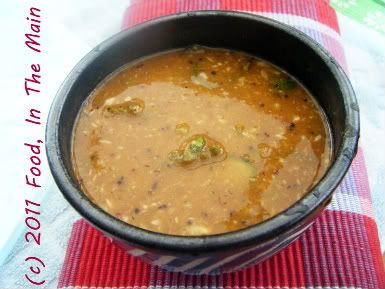
Ingredients:
2 medium karela/bittergourd/pavakkai, sliced into rounds
1 cup masoor dal, cooked
1 tbsp tamarind paste
3 tsp gingelly oil (or any neutral cooking oil)
1 tsp mustard seeds
2 tbsp sambar powder
2 tbsp finely grated coconut
1/2 tsp asafoetida powder
1 tbsp rice flour
Salt to taste
a few fresh curry leaves, torn up
3-4 cups water
Method:
1. Heat the oil in a small pan and add the asafoetida powder, mustard seeds and curry leaves.
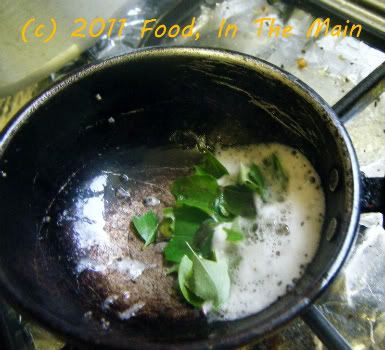 Cover and let the seeds pop, then add the grated coconut.
 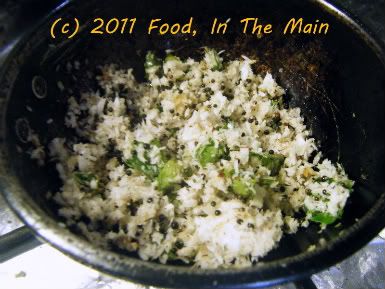 Fry on medium heat till the coconut is light brown and aromatic.
 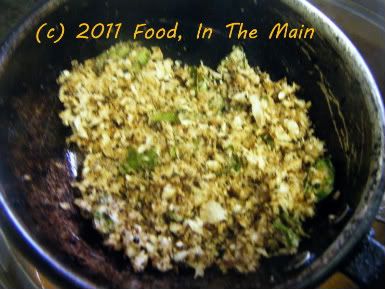 Remove from heat and set aside till required.
2. Put about a cupful of water in a pan along with the karela/bittergourd/pavakkai and turmeric powder.
Remove from heat and set aside till required.
2. Put about a cupful of water in a pan along with the karela/bittergourd/pavakkai and turmeric powder. 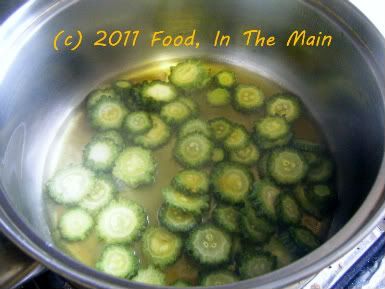 Let it cook till it becomes soft.
3. Dissolve the tamarind paste in 2 cup water and add it to the cooked karela/bittergourd/pavakkai.
Let it cook till it becomes soft.
3. Dissolve the tamarind paste in 2 cup water and add it to the cooked karela/bittergourd/pavakkai.
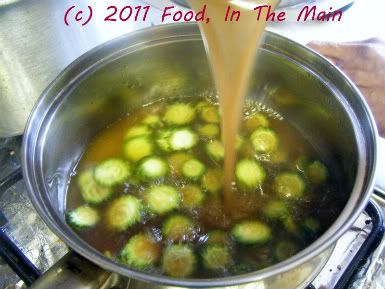 4. Bring this to a boil, then add the sambar powder and rice powder and stir till well mixed.
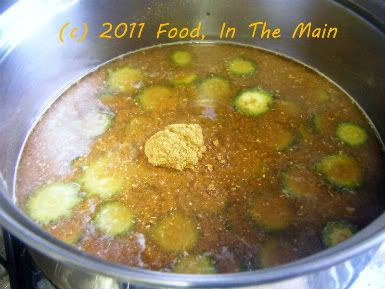 5. Stir in the cooked masoor dal
 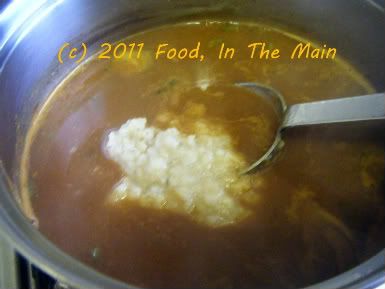 6. Add salt to taste along with the roasted coconut and mix in.
 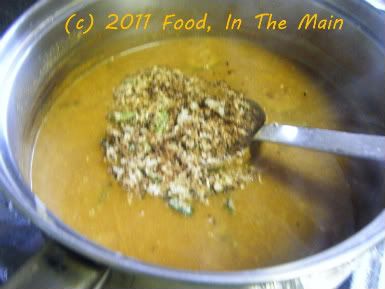 7. Boil the pitla for a few minutes longer till it thickens.
 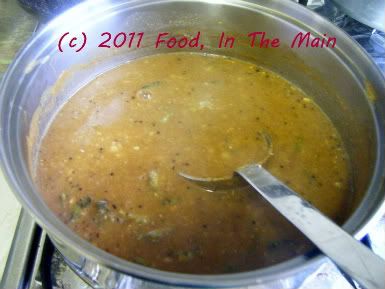 Serve hot with rice.
 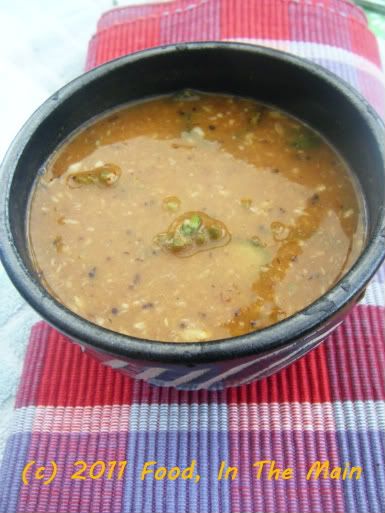 RECIPE: BITTERGOURD/KARELA/PAVAKKAI PITLA
Ingredients:
2 medium karela/bittergourd/pavakkai, sliced into rounds
1 tbsp tamarind paste
3 tsp gingelly oil (or any neutral cooking oil)
1 tsp mustard seeds
2 tbsp sambar powder
2 tbsp finely grated coconut
1/2 tsp asafoetida powder
1 tbsp rice flour
Salt to taste
a few fresh curry leaves, torn up
3-4 cups water
Method:
1. Heat the oil in a small pan and add the asafoetida powder, mustard seeds and curry leaves. Cover and let the seeds pop, then add the grated coconut. Fry on medium heat till the coconut is light brown and aromatic. Remove from heat and set aside till required.
2. Put about a cupful of water in a pan along with the karela/bittergourd/pavakkai and turmeric powder. Let it cook till it becomes soft.
3. Dissolve the tamarind paste in 2 cup water and add it to the cooked karela/bittergourd/pavakkai.
4. Bring this to a boil, then add the sambar powder and rice powder and stir till well mixed.
5. Stir in the cooked masoor dal.
6. Add salt to taste along with the roasted coconut and mix in.
7. Boil the pitla for a couple of minutes longer. Serve hot with rice.
RECIPE: BITTERGOURD/KARELA/PAVAKKAI PITLA
Ingredients:
2 medium karela/bittergourd/pavakkai, sliced into rounds
1 tbsp tamarind paste
3 tsp gingelly oil (or any neutral cooking oil)
1 tsp mustard seeds
2 tbsp sambar powder
2 tbsp finely grated coconut
1/2 tsp asafoetida powder
1 tbsp rice flour
Salt to taste
a few fresh curry leaves, torn up
3-4 cups water
Method:
1. Heat the oil in a small pan and add the asafoetida powder, mustard seeds and curry leaves. Cover and let the seeds pop, then add the grated coconut. Fry on medium heat till the coconut is light brown and aromatic. Remove from heat and set aside till required.
2. Put about a cupful of water in a pan along with the karela/bittergourd/pavakkai and turmeric powder. Let it cook till it becomes soft.
3. Dissolve the tamarind paste in 2 cup water and add it to the cooked karela/bittergourd/pavakkai.
4. Bring this to a boil, then add the sambar powder and rice powder and stir till well mixed.
5. Stir in the cooked masoor dal.
6. Add salt to taste along with the roasted coconut and mix in.
7. Boil the pitla for a couple of minutes longer. Serve hot with rice.
Serendipity isn't something that manifests itself often in my life, so the rare occasions that it does, it's very exciting. On the day after I made the baked cabbage-onion masala vadas, I saw a recipe for vada-kari (literal meaning "curry made from vadas") on Srivalli's blog. There I was, with day-old vadas to hand, and there it was, a recipe to use them - like I said, exciting!
I think this particular curry must originaly have come about as a way of using up stale, hard vadas that would not otherwise be edible to most people - the fact that I like to nibble on them is by the way. I'm not most people. Nor are, I suspect, most people me. (It works both ways, as you can see. Hehe.)
Anyway, I changed very little from the original recipe, except perhaps the quantities. Oh, and I omitted the fried gram because I didn't have any, and reduced the quantity of coconut. It was one heck of a tasty curry, and the plump vadas, juicy from soaking up the liquid from the gravy, were delicious. I had them over rice with a simple cabbage-peas dry curry. Yum-my. Thank you, Srivalli's mother, for providing the recipe for vada-kari.
Man, do I love ever my fellow-food bloggers and their wide variety of homespun recipes! Long live the Internet, I say.
Recipe for: Vada-kari (lentil fritters in tomato-coconut gravy)
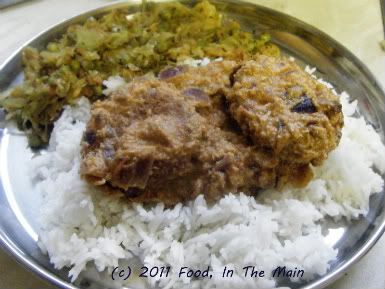 Ingredients:
About 8 day-old paruppu vadas (baked or fried)
1 medium tomato, chopped
1 medium onion, chopped fine
1 tsp ginger-garlic, grated
Ingredients:
About 8 day-old paruppu vadas (baked or fried)
1 medium tomato, chopped
1 medium onion, chopped fine
1 tsp ginger-garlic, grated
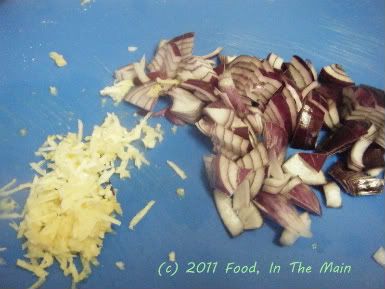 3 tsp oil
Salt to taste
Coriander leaves for garnish
For the ground masala:
3 tsp oil
Salt to taste
Coriander leaves for garnish
For the ground masala:
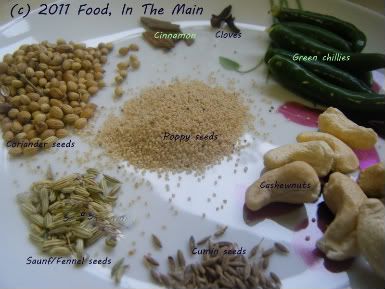 1/2 tsp fennel/saunf
1 tsp coriander seeds
1 tsp poppy seeds
1/4 tsp cumin seeds
1/2" piece cinnamon stick
2 cloves
3-5 fresh green chillies
5 cashewnuts
5-6 coconut pieces, each about 2cm long (or 2 tbsp grated coconut)
Method:
1. Heat one tsp of oil and fry all the ingredients for the ground masala till aromatic.
1/2 tsp fennel/saunf
1 tsp coriander seeds
1 tsp poppy seeds
1/4 tsp cumin seeds
1/2" piece cinnamon stick
2 cloves
3-5 fresh green chillies
5 cashewnuts
5-6 coconut pieces, each about 2cm long (or 2 tbsp grated coconut)
Method:
1. Heat one tsp of oil and fry all the ingredients for the ground masala till aromatic.
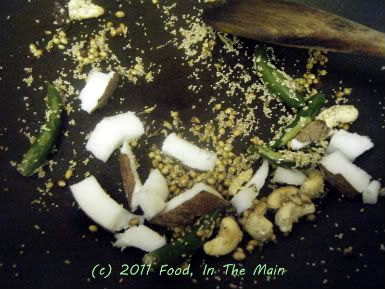 Add the coconut pieces/grated coconut and stir-fry for another two minutes, then remove to a plate and set aside to cool.
2. Heat the other tsp of oil and fry the tomatoes till they are mushy. Set aside to cool.
Add the coconut pieces/grated coconut and stir-fry for another two minutes, then remove to a plate and set aside to cool.
2. Heat the other tsp of oil and fry the tomatoes till they are mushy. Set aside to cool.
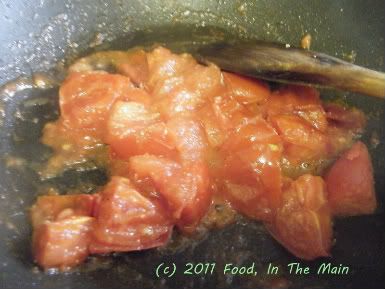 3. Once they are all cool, grind the fried ingredients and the tomatoes to a smooth paste using a little warm water if necessary. Reserve.
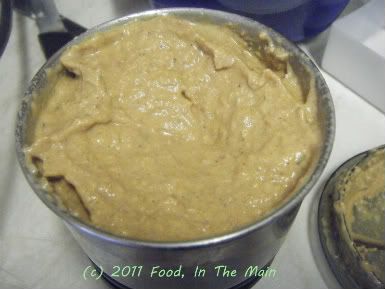 4. Now heat the remaining oil and add the ginger-garlic paste, stirring for 30 seconds or so.
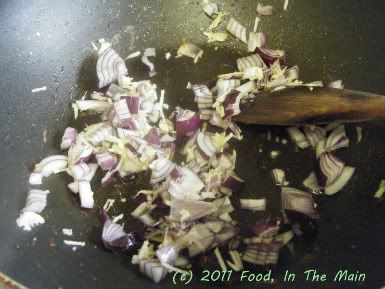
5. Then add the onions and fry till they become soft and turn pale brown.
4. Now heat the remaining oil and add the ginger-garlic paste, stirring for 30 seconds or so.
5. Then add the onions and fry till they become soft and turn pale brown.
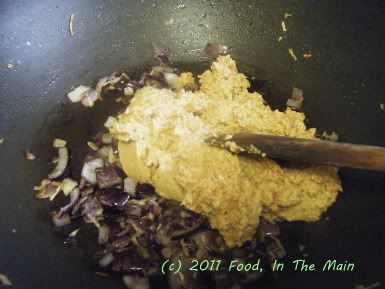
 6. Next, add the ground masala paste and stir it in,
 adding a cupful of water.
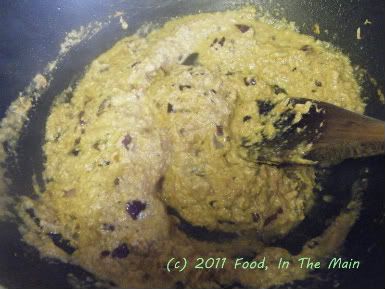 You can add a little more water at this stage, depending on how many vadas you have.
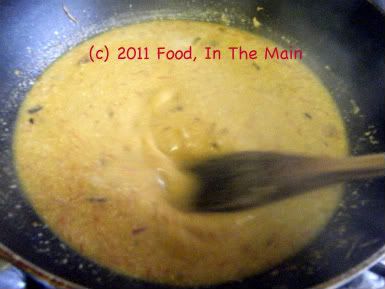 5. Bring to a gentle boil over medium heat and simmer the gravy for 5 minutes or so, till it comes together and starts to thicken.
6. Drop the vadas into the gravy now and simmer the curry for 2-3 minutes, spooning the gravy over the vadas occasionally, if necessary.
5. Bring to a gentle boil over medium heat and simmer the gravy for 5 minutes or so, till it comes together and starts to thicken.
6. Drop the vadas into the gravy now and simmer the curry for 2-3 minutes, spooning the gravy over the vadas occasionally, if necessary.
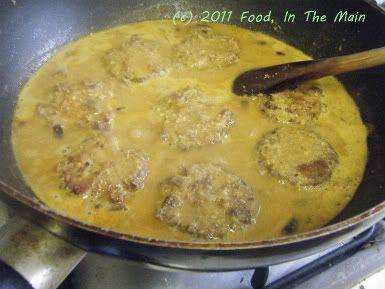 Garnish with coriander leaves and serve hot with idlis or dosas, or over rice if you like. Add a dry vegetable curry for a complete meal.
Note: If the curry sits for a while, the vadas will absorb the moisture and make the curry very thick.
RECIPE: VADA-KARI (LENTIL FRITTERS IN TOMATO-COCONUT GRAVY)
Ingredients:
About 8 day-old paruppu vadas (baked or fried)
1 medium tomato, chopped
1 medium onion, chopped fine
1 tsp ginger-garlic paste
3 tsp oil
Salt to taste
Coriander leaves for garnish
For the ground masala:
1/2 tsp fennel/saunf
1 tsp coriander seeds
1 tsp poppy seeds
1/4 tsp cumin seeds
1/2" piece cinnamon stick
2 cloves
3-5 fresh green chillies
5 cashewnuts
5-6 coconut pieces, each about 2cm long (or 2 tbsp grated coconut)
Method:
1. Heat one tsp of oil and fry all the ingredients for the ground masala till aromatic. Add the coconut pieces/grated coconut and stir-fry for another two minutes, then remove to a plate and set aside to cool.
2. Heat the other tsp of oil and fry the tomatoes till they are mushy. Set aside to cool.
3. Once they are all cool, grind the fried ingredients and the tomatoes to a smooth paste using a little warm water if necessary. Reserve.
4. Now heat the remaining oil and add the ginger-garlic paste, stirring for 30 seconds or so.
5. Then add the onions and fry till they become soft and turn pale brown.
6. Next, add the ground masala paste and stir it in, adding a cupful of water. You can add a little more water at this stage, depending on how many vadas you have.
5. Bring to a gentle boil over medium heat and simmer the gravy for 5 minutes or so, till it comes together and starts to thicken.
6. Drop the vadas into the gravy now and simmer the curry for 2-3 minutes, spooning the gravy over the vadas occasionally, if necessary.
Garnish with coriander leaves and serve hot with idlis or dosas, or over rice if you like. Add a dry vegetable curry for a complete meal.
Note: If the curry sits for a while, the vadas will absorb the moisture and make the curry very thick.
Garnish with coriander leaves and serve hot with idlis or dosas, or over rice if you like. Add a dry vegetable curry for a complete meal.
Note: If the curry sits for a while, the vadas will absorb the moisture and make the curry very thick.
RECIPE: VADA-KARI (LENTIL FRITTERS IN TOMATO-COCONUT GRAVY)
Ingredients:
About 8 day-old paruppu vadas (baked or fried)
1 medium tomato, chopped
1 medium onion, chopped fine
1 tsp ginger-garlic paste
3 tsp oil
Salt to taste
Coriander leaves for garnish
For the ground masala:
1/2 tsp fennel/saunf
1 tsp coriander seeds
1 tsp poppy seeds
1/4 tsp cumin seeds
1/2" piece cinnamon stick
2 cloves
3-5 fresh green chillies
5 cashewnuts
5-6 coconut pieces, each about 2cm long (or 2 tbsp grated coconut)
Method:
1. Heat one tsp of oil and fry all the ingredients for the ground masala till aromatic. Add the coconut pieces/grated coconut and stir-fry for another two minutes, then remove to a plate and set aside to cool.
2. Heat the other tsp of oil and fry the tomatoes till they are mushy. Set aside to cool.
3. Once they are all cool, grind the fried ingredients and the tomatoes to a smooth paste using a little warm water if necessary. Reserve.
4. Now heat the remaining oil and add the ginger-garlic paste, stirring for 30 seconds or so.
5. Then add the onions and fry till they become soft and turn pale brown.
6. Next, add the ground masala paste and stir it in, adding a cupful of water. You can add a little more water at this stage, depending on how many vadas you have.
5. Bring to a gentle boil over medium heat and simmer the gravy for 5 minutes or so, till it comes together and starts to thicken.
6. Drop the vadas into the gravy now and simmer the curry for 2-3 minutes, spooning the gravy over the vadas occasionally, if necessary.
Garnish with coriander leaves and serve hot with idlis or dosas, or over rice if you like. Add a dry vegetable curry for a complete meal.
Note: If the curry sits for a while, the vadas will absorb the moisture and make the curry very thick.
This variation on the classic arachuvitta vengaya sambar, that I posted way back when, came about thanks indirectly to my cousin Chitra, who is not only a fun person but also a really good cook. She’s in Seattle now on holiday and I deeply regret that I did not get the opportunity to invite myself over for a meal at her daughter’s place while I was there – mainly because I had to leave pretty much as she arrived, and there was no time.
I still vividly remember the chole she had made when we were in Madras – this is going back well over 10 years – which was hands down the best I’ve ever had, EVER. I haven’t had the opportunity of pigging out on her food in years now, and she can only have got better and better.
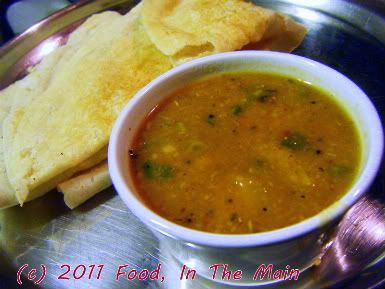
Anyway, the other day when I was Skyping with my mother, she mentioned Chitra's variation on arachuvitta sambar, so of course I had to try it out rightaway. It came out absolutely spectacular, and I kid you not, I was more than happy to eat it morning noon and night – with plain rice, with curd rice, with dosas, with idlis, with Greek yogurt... it was the star turn every single time. Needless to say, the sambar didn’t even last three days – and I was the only one eating it! If there was anybody else to share it with, I’d have had to make TWO bucketsful!
Note: If you can get the little Indian sambar onions or shallots, use those. I think they’re far more flavourful than regular onions – especially if you’re going to the trouble of making this arachuvitta sambar.
And for my fellow Tamils... this literally IS "arachuvitta vengaya sambar" :-)
Recipe for: Arachuvitta vengaya sambar - Version 2
 Ingredients:
1 cup tuvar/toor dal/thuvaram paruppu, to make 2 cups well cooked and mashed dal
Ingredients:
1 cup tuvar/toor dal/thuvaram paruppu, to make 2 cups well cooked and mashed dal
 2 tsp tamarind paste dissolved in 5-6 cups water OR lime-sized ball of tamarind, pulp extracted to make 5-6 cups tamarind water
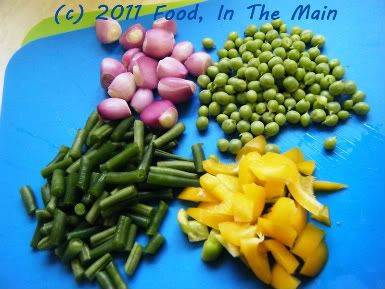 1/4 cup green beans sliced
1/4 cup fresh peas
10-12 sambar onions or 1 medium onion sliced
1/4 cup capsicum, cut in 1/2" pieces
Ground masala 1
1/4 cup green beans sliced
1/4 cup fresh peas
10-12 sambar onions or 1 medium onion sliced
1/4 cup capsicum, cut in 1/2" pieces
Ground masala 1
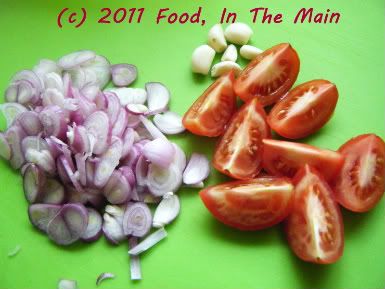 1 tsp oil
5-6 cloves garlic
10-15 sambar onions (preferably), to make 1/4 cup sliced
2 small tomatoes, cut into pieces
Ground masala 2
1 tsp oil
5-6 cloves garlic
10-15 sambar onions (preferably), to make 1/4 cup sliced
2 small tomatoes, cut into pieces
Ground masala 2
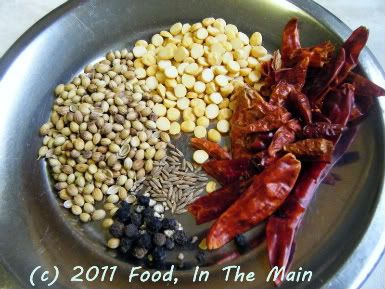 1 tsp oil
2 tsp coriander seeds
2 tsp kadala paruppu/chana dal
5-6 dried red chillies (or to taste)
1/2 tsp cumin seeds
1/2 tsp black peppercorns
3-4 tbsp fresh coconut (pieces or grated)
For tempering
1 tsp oil
1 htsp mustard seeds
a few fresh or frozen curry leaves
1/2 tsp turmeric powder
1/4 tsp asafoetida powder
3-4 tbsp coriander leaves chopped, for garnish
Method:
1. Heat 1 tsp oil and add the mustard seeds, curry leaves, turmeric powder and asafoetida powder.
1 tsp oil
2 tsp coriander seeds
2 tsp kadala paruppu/chana dal
5-6 dried red chillies (or to taste)
1/2 tsp cumin seeds
1/2 tsp black peppercorns
3-4 tbsp fresh coconut (pieces or grated)
For tempering
1 tsp oil
1 htsp mustard seeds
a few fresh or frozen curry leaves
1/2 tsp turmeric powder
1/4 tsp asafoetida powder
3-4 tbsp coriander leaves chopped, for garnish
Method:
1. Heat 1 tsp oil and add the mustard seeds, curry leaves, turmeric powder and asafoetida powder.
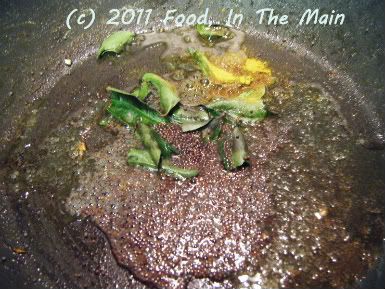 Let the mustard seeds pop, then add the green beans, peas, sambar onions and capsicum, sauteing for 3-4 minutes.
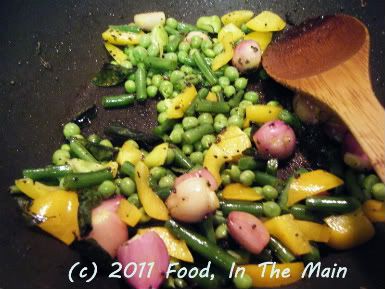 Pour in the tamarind water and bring to a boil, then turn down the heat to a gentle simmer till the vegetables are cooked - 10 minutes or so.
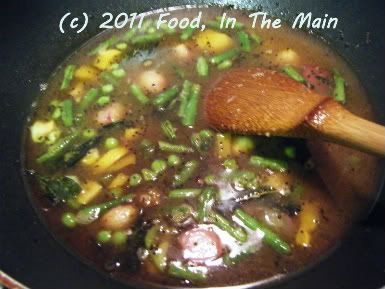 2. While the vegetables are cooking, make the tempering. Heat 1 tsp oil in a small pan and add the garlic, sliced onions and tomatoes.
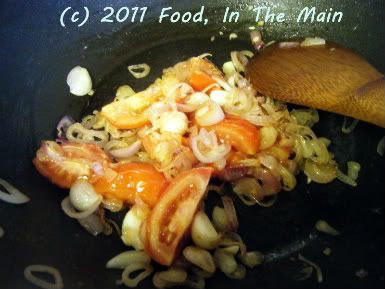 Cook till the onions are soft and the tomatoes are breaking down. Remove from the heat. Once they are cool, grind them to a smooth paste. Reserve.
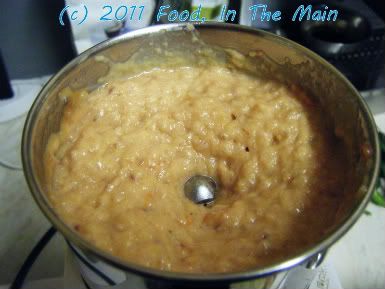 3. To make Ground Masala 2, heat a tsp of oil and add the ingredients, stir frying till the red chillies turn a darker shade and the dal and coriander seeds are aromatic and turn colour. If you are using pieces of coconut rather than grated, fry them for a little bit longer, but make sure not to burn any of the ingredients.
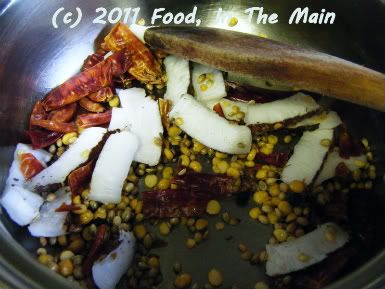 Remove from the heat and let cool, then grind to a smooth paste using a few tbsp of warm water as required. Reserve.
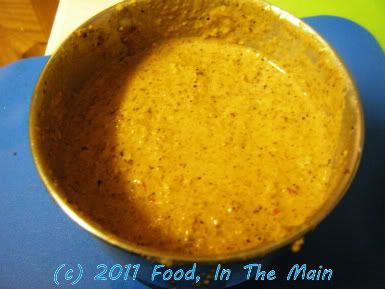 4. Once the vegetables are cooked, stir the tomato-onion paste into the tamarind water and let it boil for 2 minutes.
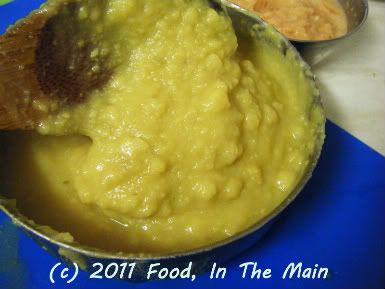
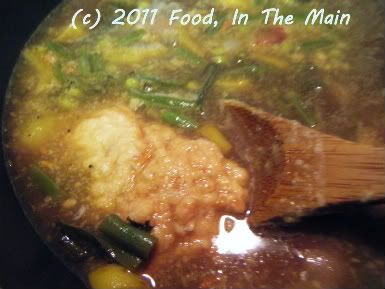 5. Now stir in the mashed cooked dal, making sure there are no lumps.
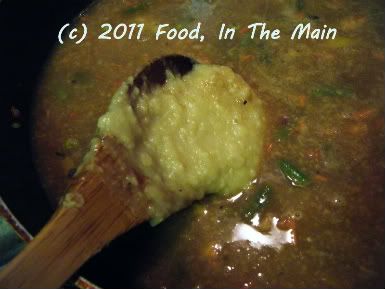 6. After a couple more minutes, add the ground coconut masala
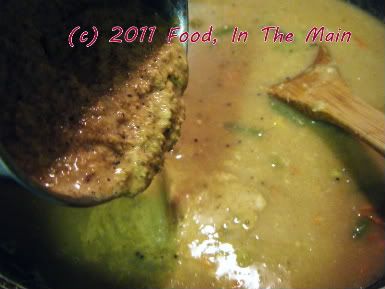 and salt to taste, then bring the sambar back to a gentle simmer. Let it cook for 4-5 minutes longer, till the contents are well homogenised.
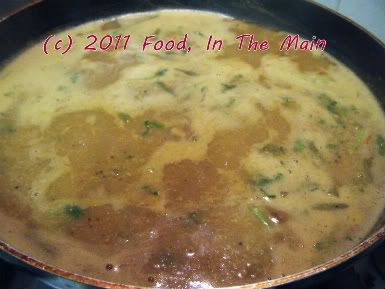
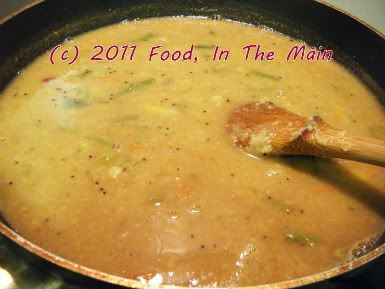 7. Garnish with the chopped coriander and serve hot with rice and any dry vegetable curry, or with dosas and idlis for an extra-special meal.
 RECIPE: ARACHUVITTA VENGAYA SAMBAR - VERSION 2
Ingredients:
1 cup tuvar/toor dal/thuvaram paruppu, to make 2 cups well cooked and mashed dal
2 tsp tamarind paste dissolved in 5-6 cups water OR lime-sized ball of tamarind, pulp extracted to make 5-6 cups tamarind water
1/4 cup green beans sliced into 1" lengths
1/4 cup fresh peas
10-12 sambar onions or 1 medium onion sliced
1/4 cup capsicum, cut in 1/2" pieces
Ground masala 1
1 tsp oil
5-6 cloves garlic
10-15 sambar onions (preferably), to make 1/4 cup sliced
2 small tomatoes, cut into pieces
Ground masala 2
1 tsp oil
2 tsp coriander seeds
2 tsp kadala paruppu/chana dal
5-6 dried red chillies (or to taste)
1/2 tsp cumin seeds
1/2 tsp black peppercorns
3-4 tbsp fresh coconut (pieces or grated)
For tempering
1 tsp oil
1 htsp mustard seeds
a few fresh or frozen curry leaves
1/2 tsp turmeric powder
1/4 tsp asafoetida powder
3-4 tbsp coriander leaves chopped, for garnish
Method:
1. Heat 1 tsp oil and add the mustard seeds, curry leaves, turmeric powder and asafoetida powder. Let the mustard seeds pop, then add the green beans, peas, sambar onions and capsicum, sauteing for 3-4 minutes. Pour in the tamarind water and bring to a boil, then turn down the heat to a gentle simmer till the vegetables are cooked - 10 minutes or so.
2. While the vegetables are cooking, make the tempering. Heat 1 tsp oil in a small pan and add the garlic, sliced onions and tomatoes. Cook till the onions are soft and the tomatoes are breaking down. Remove from the heat. Once they are cool, grind them to a smooth paste. Reserve.
3. To make Ground Masala 2, heat a tsp of oil and add the ingredients, stir frying till the red chillies turn a darker shade and the dal and coriander seeds are aromatic and turn colour. If you are using pieces of coconut rather than grated, fry them for a little bit longer, but make sure not to burn any of the ingredients. Remove from the heat and let cool, then grind to a smooth paste using a few tbsp of warm water as required. Reserve.
4. Once the vegetables are cooked, stir the tomato-onion paste into the tamarind water and let it boil for 2 minutes.
5. Now stir in the mashed cooked dal, making sure there are no lumps.
6. After a couple more minutes, add the ground coconut masala and salt to taste, then bring the sambar back to a gentle simmer. Let it cook for 4-5 minutes longer, till the contents are well homogenised.
7. Garnish with the chopped coriander and serve hot with rice and any dry vegetable curry, or with dosas and idlis for an extra-special meal.
RECIPE: ARACHUVITTA VENGAYA SAMBAR - VERSION 2
Ingredients:
1 cup tuvar/toor dal/thuvaram paruppu, to make 2 cups well cooked and mashed dal
2 tsp tamarind paste dissolved in 5-6 cups water OR lime-sized ball of tamarind, pulp extracted to make 5-6 cups tamarind water
1/4 cup green beans sliced into 1" lengths
1/4 cup fresh peas
10-12 sambar onions or 1 medium onion sliced
1/4 cup capsicum, cut in 1/2" pieces
Ground masala 1
1 tsp oil
5-6 cloves garlic
10-15 sambar onions (preferably), to make 1/4 cup sliced
2 small tomatoes, cut into pieces
Ground masala 2
1 tsp oil
2 tsp coriander seeds
2 tsp kadala paruppu/chana dal
5-6 dried red chillies (or to taste)
1/2 tsp cumin seeds
1/2 tsp black peppercorns
3-4 tbsp fresh coconut (pieces or grated)
For tempering
1 tsp oil
1 htsp mustard seeds
a few fresh or frozen curry leaves
1/2 tsp turmeric powder
1/4 tsp asafoetida powder
3-4 tbsp coriander leaves chopped, for garnish
Method:
1. Heat 1 tsp oil and add the mustard seeds, curry leaves, turmeric powder and asafoetida powder. Let the mustard seeds pop, then add the green beans, peas, sambar onions and capsicum, sauteing for 3-4 minutes. Pour in the tamarind water and bring to a boil, then turn down the heat to a gentle simmer till the vegetables are cooked - 10 minutes or so.
2. While the vegetables are cooking, make the tempering. Heat 1 tsp oil in a small pan and add the garlic, sliced onions and tomatoes. Cook till the onions are soft and the tomatoes are breaking down. Remove from the heat. Once they are cool, grind them to a smooth paste. Reserve.
3. To make Ground Masala 2, heat a tsp of oil and add the ingredients, stir frying till the red chillies turn a darker shade and the dal and coriander seeds are aromatic and turn colour. If you are using pieces of coconut rather than grated, fry them for a little bit longer, but make sure not to burn any of the ingredients. Remove from the heat and let cool, then grind to a smooth paste using a few tbsp of warm water as required. Reserve.
4. Once the vegetables are cooked, stir the tomato-onion paste into the tamarind water and let it boil for 2 minutes.
5. Now stir in the mashed cooked dal, making sure there are no lumps.
6. After a couple more minutes, add the ground coconut masala and salt to taste, then bring the sambar back to a gentle simmer. Let it cook for 4-5 minutes longer, till the contents are well homogenised.
7. Garnish with the chopped coriander and serve hot with rice and any dry vegetable curry, or with dosas and idlis for an extra-special meal.


